The Two Rules Everything Else Comes From
Before the techniques, the reason they work. A murder mystery sudoku rests on two rules, and only two.
The first is the sudoku one: one person per row and one per column, no repeats. Everyone counts, the victim included. And some squares cannot hold anyone: the ones taken up by furniture. They are shaded and out of play.
The second is that the cards tell the truth. Each suspect signs a statement about where they were — in an area, on an object, in a row, next to another person — and that statement is true. When a case has a liar, it tells you before you start.
From those two comes the part that matters: the case has exactly one solution, and you can reach it without guessing. If you are trying things to see what fits, there is a safe step you have not spotted yet.
1Start With the Most Specific Clue, Not the First One
The beginner's mistake is to read the cards in order and go after the first one. Read them all and rank them by how much they narrow things down.
At the top go the ones that leave a single possible square: “I was on the rug” when the map has only one rug, “I was sitting in the armchair,” “I was in a corner.” Those people place themselves, with no deduction at all.
Then the ones that leave two or three: “I was in the Kitchen,” “I was in the first column.” And last, the ones that talk about somebody else: “I was next to Bruno” is worth nothing until Bruno has a square.
Place the person with the most specific card and look at the list again. The ranking changes after every placement, and that is exactly what moves the case forward.
 Alice“I was on the rug.”
 Bruno“I was in the Kitchen.”
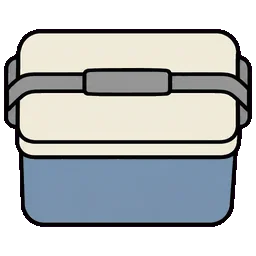
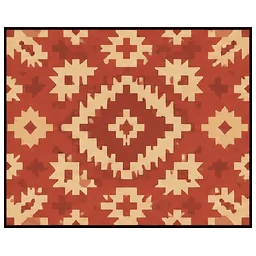
 KitchenLiving RoomBedroom
2The Cross: Every Person You Place Clears Their Row and Column
This is the technique that does the most work and the one people forget most. The moment someone has their square, cross out the whole row and the whole column: nobody else can be there.
Cross them out for real, on the map, not in your head. Every ✕ you make shrinks everyone else's options, and a case is solved by piling up crosses, not by flashes of inspiration.
The flip side is just as useful: if a row or a column has only one free square left, somebody has to be on it. You do not know who yet, and it does not matter: mark it as taken and keep going. The name comes later, once the cards have closed in around it.
A KitchenLiving RoomBedroomDining Room
3Rule Out by Area, and Read the General Clues Twice
Before you wrestle with single squares, ask yourself who can be in each area. You get further area by area than square by square.
This is where the general clues pay off — the ones at the foot of the case that belong to nobody: “There were only women on the Dock,” “Nobody was next to a rock.” They place no one, but they clear whole areas for half the suspects, and they are usually what gets a stuck case moving again.
And one detail that costs points until it sinks in: “next to” means on the neighboring square — above, below, left or right, never diagonally — and in the same area. Two squares that touch but have a wall between them are not next to each other. That detail only ever rules out placements that looked right, which is exactly what you need.
Alice“I was next to the plant.”Living RoomKitchenHallway4The Locked Pair: Two Squares in the Same Row
The intermediate technique, and the one that separates people who solve the easy cases from people who solve the hard ones.
If a suspect has only two possible squares left and both are in the same row, you still do not know which one they are on… but you already know that row is theirs. Nobody else can be in it: cross out the rest of that row for everyone else. Two squares in the same column work the same way.
It is the same reasoning as in classic sudoku, and it works before anyone is placed. When a case stalls and there is no forced square in sight, what is missing is almost always a locked pair nobody has noticed.
BB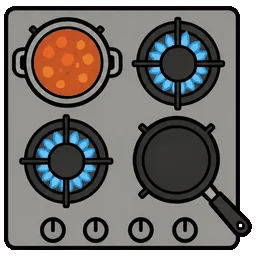 Living RoomKitchenBedroomDining Room
5The Victim Closes the Case
The victim plays by the same rules as everyone else: they take a square and respect their row and their column. In practice, that makes the victim the last piece: once everyone is placed, the victim takes the square that is left.
It also works backward. If at some point only one free square is left and you have not placed anyone on it, you already know where the victim was — and with it, the area where it all happened. Whoever shares that area with the victim is the murderer.
So it pays to look at the ending before you get there: sometimes a case comes apart from the back, from the only area where the crime could have happened.
AB CVKitchenBedroomLiving Room
And If You Are Still Stuck
Go through this list in order: have you crossed out the row and column of everyone you placed? Have you reread the general clues after your latest placements? Is there a row or column with a single free square? Is there a locked pair?
If you are still stuck, the website has step-by-step hints: they give you the next step of the reasoning, with the why, not the answer. You learn more from one hint you read than from half an hour of trial and error, and some cases have their solution explained on video.
Where to Practice These Techniques
They sink in best with a pencil, and that is what the book is for. Sudoku Detective is a paperback, in full color, with illustrated settings and the solution to every case explained step by step: it does not hand you the finished map, it walks you through the reasoning that gets there, which is the part that sticks. The cases in the book are only in the book: they are not on the website.
To practice today, there are free cases in your browser, with no sign-up and nothing to install, and new cases every week; printable cases with their solutions explained in a separate PDF; and the full rules with a case solved from start to finish, in case you missed one.
Like logic puzzles? Try Einstein's riddle, with a grid to solve it right here.
Frequently Asked Questions
Do I need to know how to play sudoku?
No. Only one rule comes from sudoku: one person per row and one per column. Everything else is deducing from what the cards say, and you pick that up in your first case.
Can you solve it by trial and error?
You do not need to, and it is the slow way. A well-built case has exactly one solution and there is always a safe step available: if you are guessing, there is a deduction you have not spotted yet.
What exactly does “next to” mean?
On the neighboring square — above, below, left or right, never diagonally — and in the same area. Two squares that touch but have a wall between them are not next to each other.
Where do I start on my first case?
With the card that leaves a single possible square, usually the one that names an object there is only one of. Place that person, cross out their row and column, then reread the other cards: one of them has almost always become specific.
Does the victim count for the row and column rule?
Yes. The victim takes a square like anyone else and respects their row and column, and is usually the last one placed. The murderer is whoever shares an area with the victim.
Where can I practice with explained solutions?
In the Sudoku Detective book, which explains the solution to every case step by step. The website also has hints that give you the next step of the reasoning instead of the answer.
Pass it on to a friend