
The Six Cases
Free, no sign-up, and each one comes in color, in black and white and with the solution on its own sheet. Tap one to see it and print it.
The Haunted Mansion · a murder
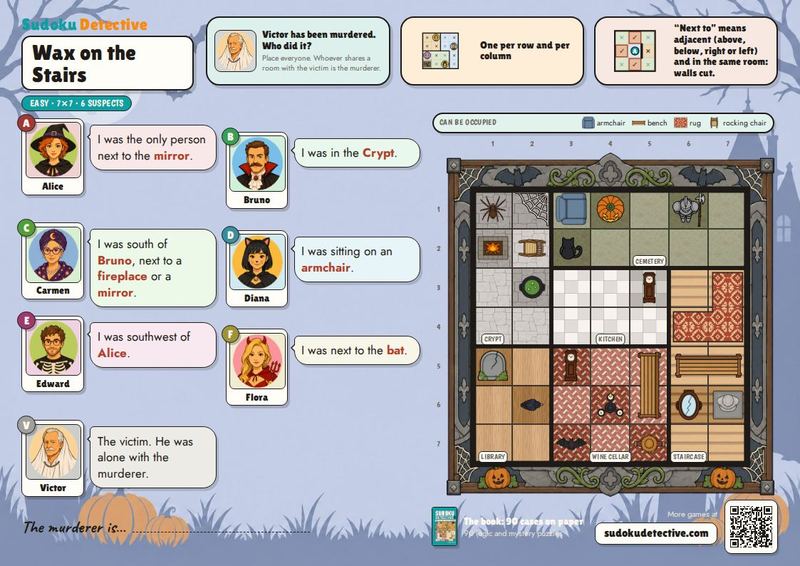 Wax on the StairsEasy · 7×7 · 6 suspectsPrint for free
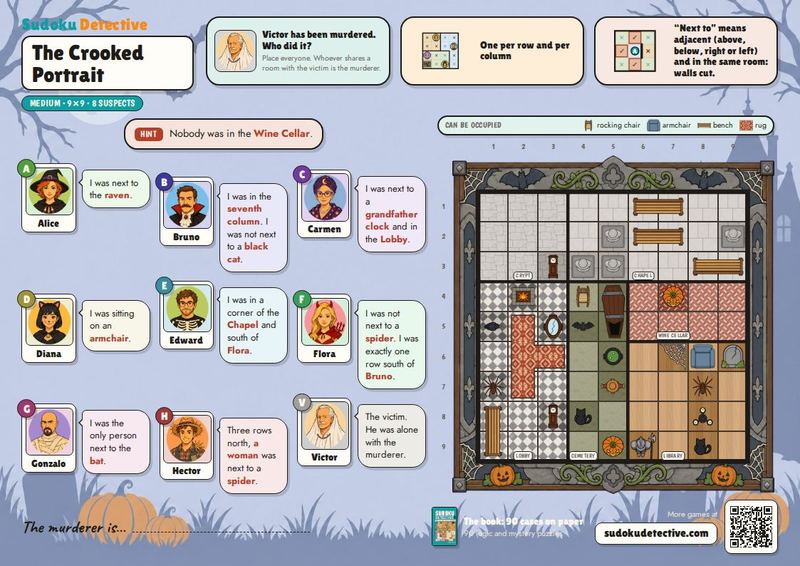 The Crooked PortraitMedium · 9×9 · 8 suspectsPrint for free
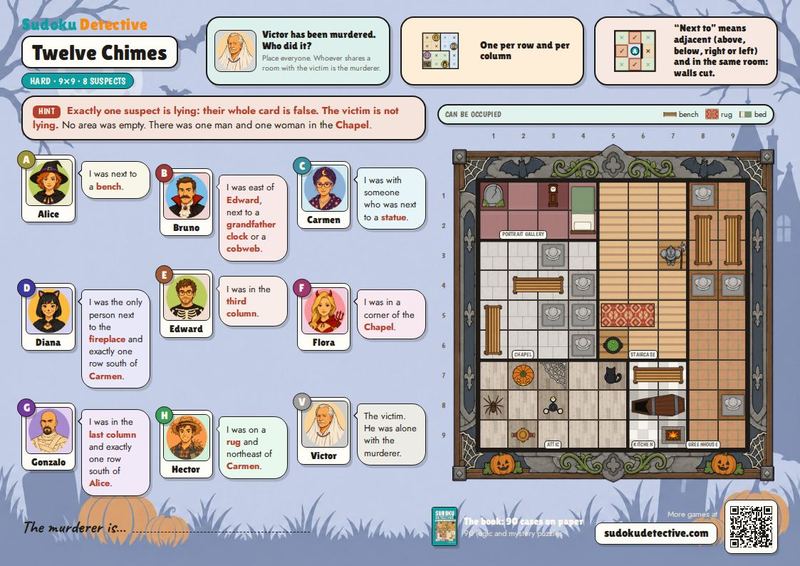 Twelve ChimesHard · 9×9 · 8 suspectsPrint for free
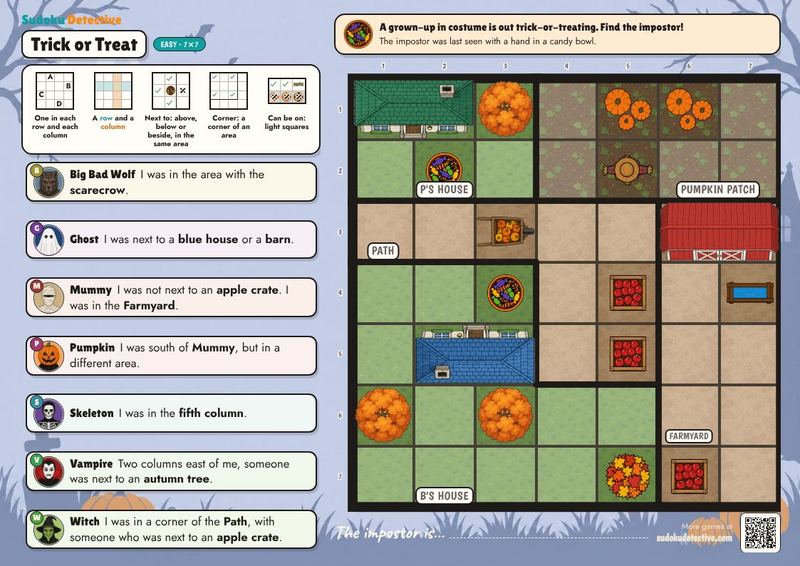
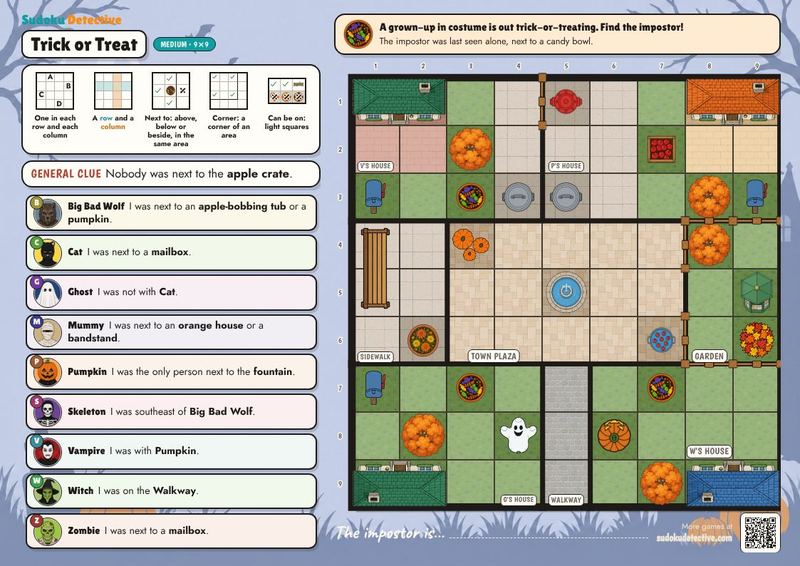
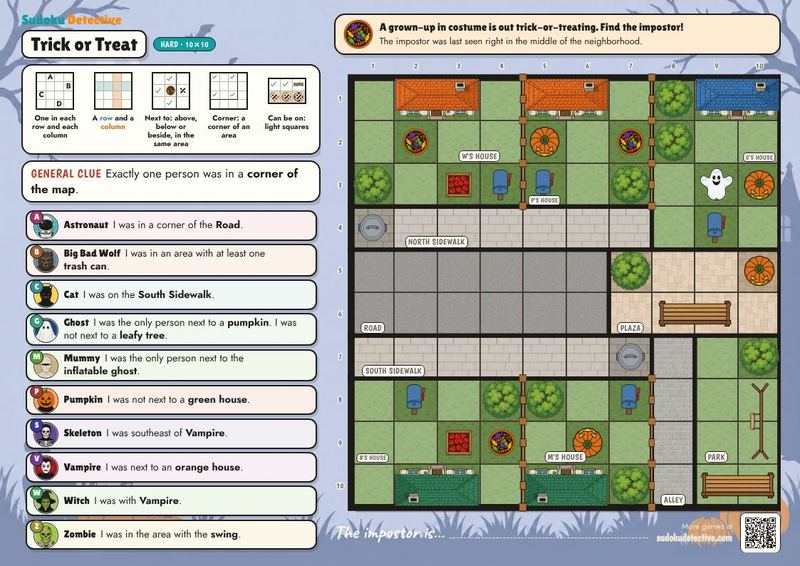
Trick or Treat · no murder
Halloween Logic Puzzles: What These Cases Are
Each case is a sheet with a map drawn from above (the areas, the furniture, the paths) and a set of cards where each suspect says where they were. With that and a pencil, you place everyone on the map and find out who did it. There is no guessing: everything follows from what the cards say.
It is a murder mystery sudoku, the same kind of puzzle many people know as murdoku: one person per row and per column, like in sudoku, but with names instead of numbers. If you were looking for a printable Halloween murdoku, this is the same thing, with our own cases and our own drawings.
The ones in the Haunted Mansion are a classic murder: the suspects are in costume and, in the end, one of them is left alone with the victim. The Trick or Treat cases have no murder, but they are no easier: a grown-up in costume has slipped into a round of trick-or-treating, and you have to work out who it is. The hard one, at 10×10, is the longest of the six.
Which One to Pick
To get started. Wax on the Stairs or Trick or Treat in the Country: the two easy ones, at 7×7.
With a little practice. The Crooked Portrait or Trick or Treat in the Square, at 9×9.
For anyone who has already solved a few. Twelve Chimes or Trick or Treat in the Neighborhood, the biggest of the six.
If you are playing with kids, the Trick or Treat cases have no murder: start with the easy one, with a grown-up alongside.
How to Play, in One Minute
One per row and per column. Every row and every column of the map holds exactly one person.
The cards tell the truth. Each suspect says where they were. Pencil in where each one could be and cross out where they can't.
In the mansion, the murderer. Whoever ends up alone with the victim is the murderer.
In Trick or Treat, the impostor. Among the trick-or-treaters there is a grown-up in costume. Once everyone is placed, read where the impostor was last seen: only one suspect is there, and that's the impostor.
The full rules, with drawings, are in how to play.
What Halloween Is and Where It Comes From
Halloween is celebrated on the night of October 31, the eve of All Saints' Day. The name says it all: it comes from All Hallows' Eve, "the eve of all the saints," which over the years got shortened to Hallowe'en.
Its roots are older than the name. The Celtic peoples of Ireland, Scotland and northern Europe celebrated Samhain at the end of the harvest, when the dark half of the year began. People believed that on that night the line between the living and the dead grew thin, so they lit bonfires and left food out for the souls. When the Church set All Saints' Day on November 1, the two celebrations ended up merging.
The holiday as we know it today, with costumes, pumpkins and kids out in the streets, was brought to the United States by Irish and Scottish immigrants in the 19th century. From there it spread back around the world, mostly through movies and television.
What Trick-or-Treating Is and Where It Comes From
On Halloween night, trick-or-treating is the custom of kids in costume going door to door asking for candy. The phrase is a playful deal: give me something sweet (the treat), or I'll play a prank on you (the trick). The prank almost never happens: people have the candy bowl ready.
It has two ancestors. In the Middle Ages, in Britain and Ireland, the poor went from house to house around All Saints' Day, praying for each family's dead in exchange for small cakes called soul cakes. And in Scotland and Ireland, children went out in disguise to sing, recite a poem or tell a joke in exchange for fruit, nuts or a coin; they called it guising, from disguise.
The phrase trick or treat first shows up in print in North America in the 1920s, and the custom spread across the United States after World War II. Our Trick or Treat cases come straight from there: a group of kids in costume going around town for candy, and a grown-up who has slipped in among them.
Why a Pumpkin
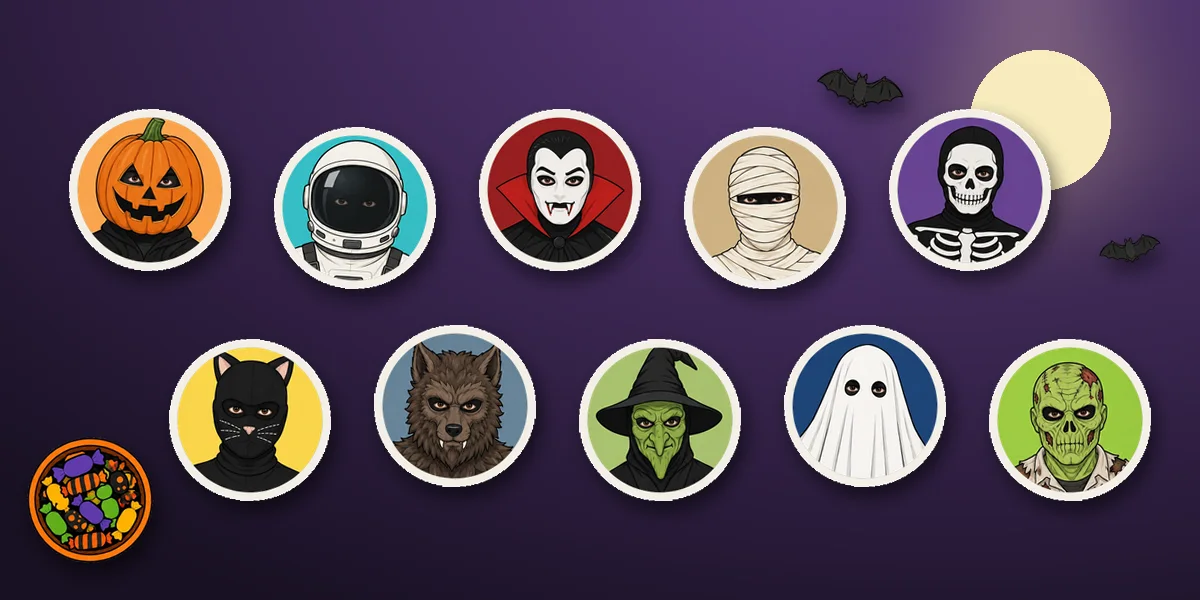
The pumpkin with a face comes from an Irish legend, the one about Stingy Jack: a man who tricked the devil and, when he died, was turned away from both heaven and hell, so he wanders the world with a glowing coal inside a hollowed-out turnip to light his way. That is why in Ireland people carved faces into turnips and set them in the windows.
In America there were pumpkins, bigger and much easier to hollow out, and the turnip stayed behind in Europe. That is where the name jack-o'-lantern comes from: Jack's lantern.
Halloween in Ireland, the UK and the US
In Ireland, where it was born, people eat barmbrack, a fruit bread with a ring hidden inside: tradition says whoever gets the ring will marry soon. In Scotland, guising is still alive, and people try to catch apples floating in a tub of water using only their mouths (apple dooking, or bobbing for apples). In England, Bonfire Night, or Guy Fawkes Night, on November 5, with bonfires and fireworks, overshadowed Halloween for a long time.
And the United States is where it is celebrated in a big way: pumpkin patches, decorated houses and whole neighborhoods out trick-or-treating. That is why a game that works for a classroom, for the family and for a dinner with friends fits this time of year so well.
Halloween Activities at Home, in Class or at a Party
At home. One case for the whole family, printed in black and white, one copy each: everyone solves it on their own sheet, and the winner is the first to name the culprit and explain why.
In class. In pairs, with the same case for everyone. For younger kids, the easy Trick or Treat case, which has no murder; for older ones, any of them. They are free to print and hand out in the classroom.
At a party or a dinner. One case per pair and the solution in an envelope, to open at the end. How to set up the whole night, with team and round-the-table variations, is in a Halloween night with a murder mystery sudoku.
Print Without Using Up Your Ink
Every case comes in color and in black and white, which is the one to use for lots of copies. The solution is on a separate sheet, explained step by step, so you can hand it out at the end and not before. The sheets are landscape.
And if you want more, there are printable cases all year round, some for kids, and you can play in the browser without printing anything.
Frequently Asked Questions
Are these printable Halloween games free?
Yes, all six, with no sign-up and no email. Each one comes in color, in black and white and with the solution on its own sheet.
What is a Halloween murdoku?
A murder mystery sudoku with a Halloween theme: a map, a few suspects who say where they were, one person per row and per column, and a culprit you deduce. Murdoku is the name many people know this kind of puzzle by; these are ours.
Can I play with kids?
Yes, with a grown-up alongside. The Trick or Treat cases have no murder, and the easy one is the best place to start; the medium and hard ones take patience even for adults.
What does trick or treat mean?
It is what kids in costume say as they go door to door for candy: give me a treat, or, jokingly, I'll play a trick on you.
Why is Halloween on October 31?
Because it is the eve of All Saints' Day, November 1. The name comes from "All Hallows' Eve," the eve of all the saints.
Can I hand them out in a classroom?
Yes, they are free to print and hand out in classrooms and libraries; all we ask is that you keep the credit: sudokudetective.com
What if we get stuck?
The solution, explained step by step, is on its own sheet.
Pass it on to a friend